 |
|
Slavic origin. Paleo-Slavic cultures and alphabets. |
 |
|
|
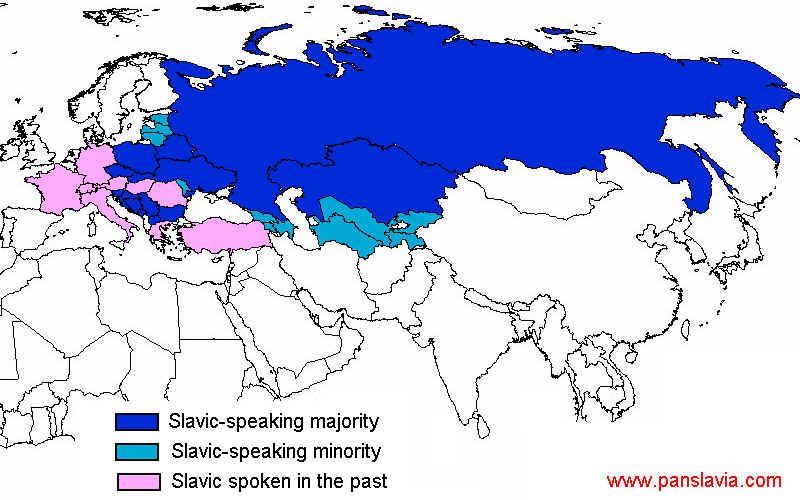
Speculations and facts. Much has been speculated over the years about the Slavs and their orginin. Problem is that the facts have been often intentionally turned on their heads by various German-speaking 'historians', whose purpose was to 'prove' their own 'superiority' and inferiority of everybody else. Historical documents and linguistic studies prove that Slavs are the direct descendants of the Veneti, the founders of Venice, Viena, and the people who have created the amber route and dominated the amber trade for over a thousand years. Historically they are also known as Enetoi and have inhabited the entire region of Balkans, north of Greece, Northern Itally, Hungary, Romania, Austria, Bavaria, Northern Switzerland, Czech and Slovak Repulics Poland and central Germany all the way to today's Hamburg. The Slavs have inhabited this region since about 1500 B.C., and inhabit about 75 percent of that region to this day. From this core area they have spread eastwards to Belarus, Ukraine and Russia. Other Venetic Slavs have migrated westwards to central Italy, where they have been known as the Etruskans, the founders of Rome. Around the 4th century A.D. started so called migrations of nations, which have been triggered by the desertification of the areas between the Aral sea and Mongolia. This climatic catastrophy had triggered off several waves of migrations of the nomadic Turkic peoples. At different times, in different centuries, several waves of invasions of the migrating Turkic nomads have invaded today's Germany, Estonia, Hungary, Finland, Bulgaria and Turkey. In some areas they have been assimilated by the local population or have at least partly adapted the local Venetic-Slavic languages. In other areas, such as Hungary, Turkey and Finland, their languages have prevailed. The terror of the nomadic migrations has inspired some Venetic Slavs from the eastern regions to re-migrate to the western areas and blend with the local population. This re-migrations of the Venetic Slavs from the eastern regions, from the terror of primitive Turkic hunters, back to their original homeland was often mistakenly misinterpreted as the Slav migration. The writing of the Venetic Slavs gave rise to today's Latin and Greek alphabets, has been copied into Futhark runes, and eventually also the Cyrillic script. In centuries prior to their north-eastern spread to Ukraine, Belarus and Russia, the Venetic Slavs have inhabited also large parts of Anatolia and have founded Troya, a major trading city of the Mediterannean. The trading skills the Venetic Slavs have aquired during the rise and the golden age of Troya, they have later used during the development of the famous Amber Route of Europe and in founding of Venice. After the destruciton of Troya, Venice has become a new major trading port and city of the Mediterannean. In different regions and in different centuries the Veneti Slavs have been known under different names: Veneti, Etruscans, Euganei, Eneti, Enetoi, Enetii, Henetoi, Phrygians, Brigi, Venden, Lycians, Lydians, Macedonians, Ostrogoths, Vandals, etc. Today they are called Slavs. The Venetic writing is based directly on the Sumerian cuneiform writing and has given rise to the Greek, Roman, Cyrillic, Futhark, Runes and other alphabets. To this day indigenous Slavs living in central Germany, near Berlin, in the path of one of the Amber Routes, are referred to by the Germans as Venden (Wenden). Slavic Phrigians (Phrygians), dominated Anatolia (present-day Turkey) until about 600 BC. Their language is clearly Slavic: Gordum (Phrygian), Grod (Slovio), Town (English). The ultimate origin of Indoeuropean Veneti-Slavs is Iran, from where they migrated first to Mesopotamia, where they invented the Elamite and Cuneiform writings, after that they moved to Anatolia (As Phrygians or Eneti...) and finally they spread throughout Europe, from northern Italy, through the Balkans, Austria, Bavaria, Switzerland, Germany, Poland all the way to Belarus, Ukraine and Russia. Ostrogoths, Vandals. 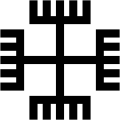 Tribes of Veneti Slavs called Vandals, have "vandalized" Rome,
destroyed the Roman empire and finally through France and Spain travelled to Africa where
they have settled on the shores of the Mediterrannean in today's Tunisia and Libya. The
graphic depicts a Veneti-Vandal symbol for 'the hands of god'. Tribes of Veneti Slavs called Vandals, have "vandalized" Rome,
destroyed the Roman empire and finally through France and Spain travelled to Africa where
they have settled on the shores of the Mediterrannean in today's Tunisia and Libya. The
graphic depicts a Veneti-Vandal symbol for 'the hands of god'.The home of the Vandals (and Ostrogoths) was the area between southern Poland and northern Serbia. The migration of Vandal Slavic warriors from central Europe through Bavaria, France and Spain into Africa has made all Slavs more susceptible to subsequent invasions both from the west and from the east and marks the beginning of the break-up of the Veneti empire. About the Ostrogoth (Vandal) culture we find very little concrete information only various guesses, mostly by Germanic scientists who assume, because of the Roman name "Ostrogoths" that they were in some ways related to "Goths and Visigoths". The problem lies in the Roman names, since to the Romans all the tribes who were not speaking Latin were "Goths" and then they subdivided them into various subgroups such as Ostrogoths (Slavs). Visigoths, etc. In a similar way the Greeks called all tribes and peoples which were non-greek speaking "Barbarians", and the Slavs called non-Slavic speaking tribes (specifically Germanic tribes) as "Nemtsi" which means "the dumb ones". To find the proof that Ostrogoths (including Vandals) were Slavs we just have to look at the typically Slavic names of their leaders. While the language of the Ostrogoths is still shrouded in mystery (maybe on purpose since Germanic researchers don't want to admit that they were Slavs), and since also their writing is also shrouded in a similar "mystery", one thing that is not shrouded and which had remained to this day are the Slavic names of their leaders. Here are just a few names of the Ostrogoth / Vandal leaders and dynasties: Valamir, Theodemir, Theodoric, Athalaric, Eraric, Geiseric, Gunderic, Hilderic, Gelimir, etc. Furthermore the name Vandals is no doubt related to the Venden (Wenden) which are aboriginal population of Veneti-Slavs living to this day in central Germany. To Slavic researchers the Venden (Wenden) are known as Sorbs. What is also interesting are the Roman sources which claim that Ostrogoths (Slavs) have come from Phrygia, which only confirms the previously stated information that Phrygians (also called Brigs) were Slavs. So while Visigoths were most likely Germanic tribes, Ostrogoths were Slavs. The confusion comes only from the common name of 'Goths' given to all non-Romans by the Romans. After clearing up the name confusion and confirming that 'Ostrogoths' were Slavs, then the entire history of Slavs and of the Veneti empire becomes more clear. Before the emigration of the Vandals from the Danubian basin into north Africa, Visigoths (probably proto-Germans) have been marginalized in the area on the North Sea, between the Veneti settlements and Holland. |
|
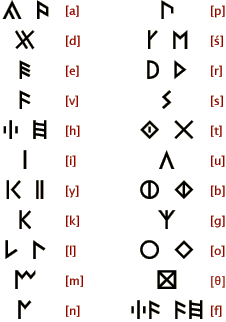
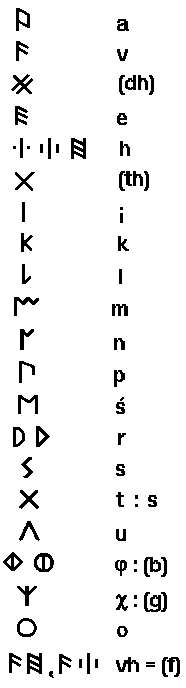
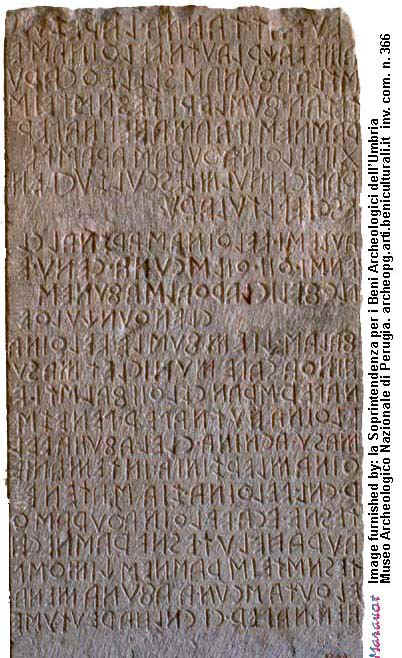
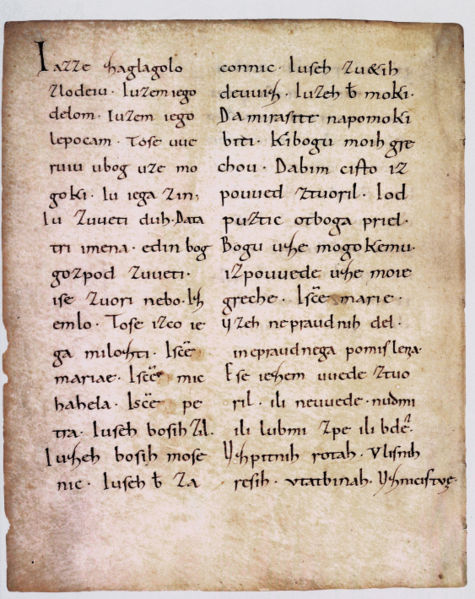
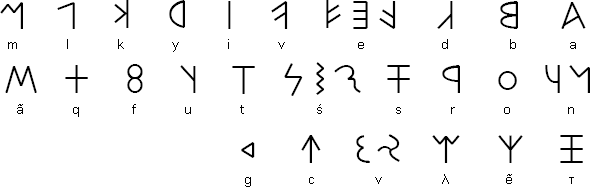
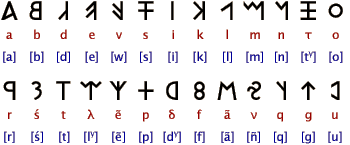
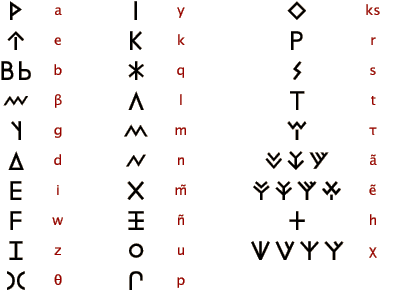
Venetic
and other paleo-Slavic alphabets. |
|
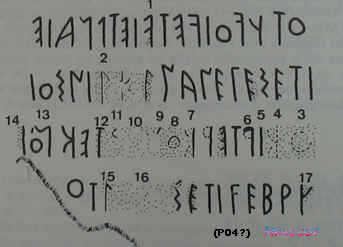
2 samples of closely related Lydian alphabet (right-to-left mirror image): |
|
|
Sample of Lycian alphabet (left-to-right mirror
image): |
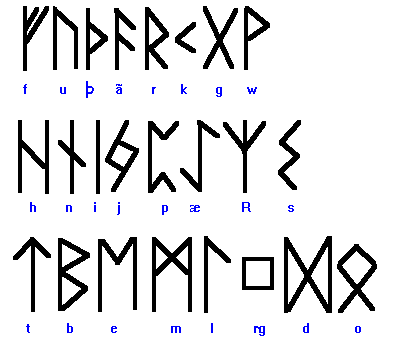
Venetic script used in northern Europe, also known as
FUTHARK (left-to-right mirror image): |
|
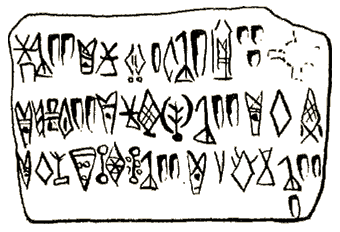
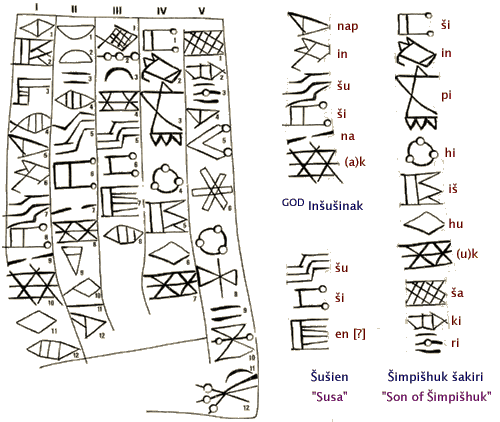
This is a proto-Elamite writing: |
The Veneti-Slavic writing and the various other variants presented here probably ultimately developed from the Elamite writing. Elam is an area on the north-eastern shores of the Persian gulf. Elamite (pre-Slavic) writing has originated about 7 or 8 thousand years BC. On this page we present a few samples of Elamite writing which bears resemblance to the Venetic slavic writing and which appears to have evolved into the Venetic and other paleo-Slavic alphabets. Since paleo-Slavic cultures have been based on and around wood, rather than clay and clay tablets, most of the paleo-Slavic documents have not survived to this day and have been eithe burned or rotted away. |
|
This is a sample of a later so-called linear Elamite writing: |
Here
is informaiton about genetic anthropology and about possible genetic origins of the Slavs: |
|
VENETI:
ANCESTORS OF SLAVS, by Pavel V. Toulaev, Moscow, Russia |
|
Macedonias have always been Slavs, never Greeks: |
|
|
The
First Bulgarian Empire (source: wikipedia) |
|
Macedonia
archeologists uncover 4,000 year old writing |
|
|
|
|
|
 |
 |
 |
 |
|
|
|
|
|
|
|
|
Related topics: |
Other related topics to this website: |


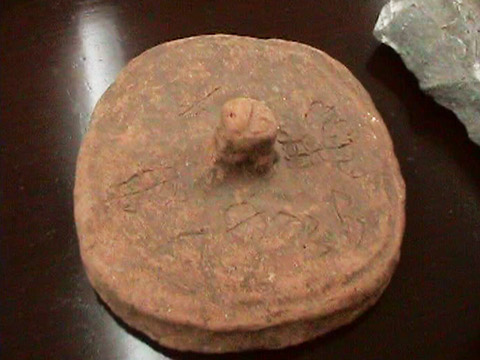 Uncovered are the
first traces of the old Macedonian language in the country, says "Dr. Dushko
Aleksovski, paleolinguistics professor and honorary president of the World Rock Art
Academy.
Uncovered are the
first traces of the old Macedonian language in the country, says "Dr. Dushko
Aleksovski, paleolinguistics professor and honorary president of the World Rock Art
Academy.